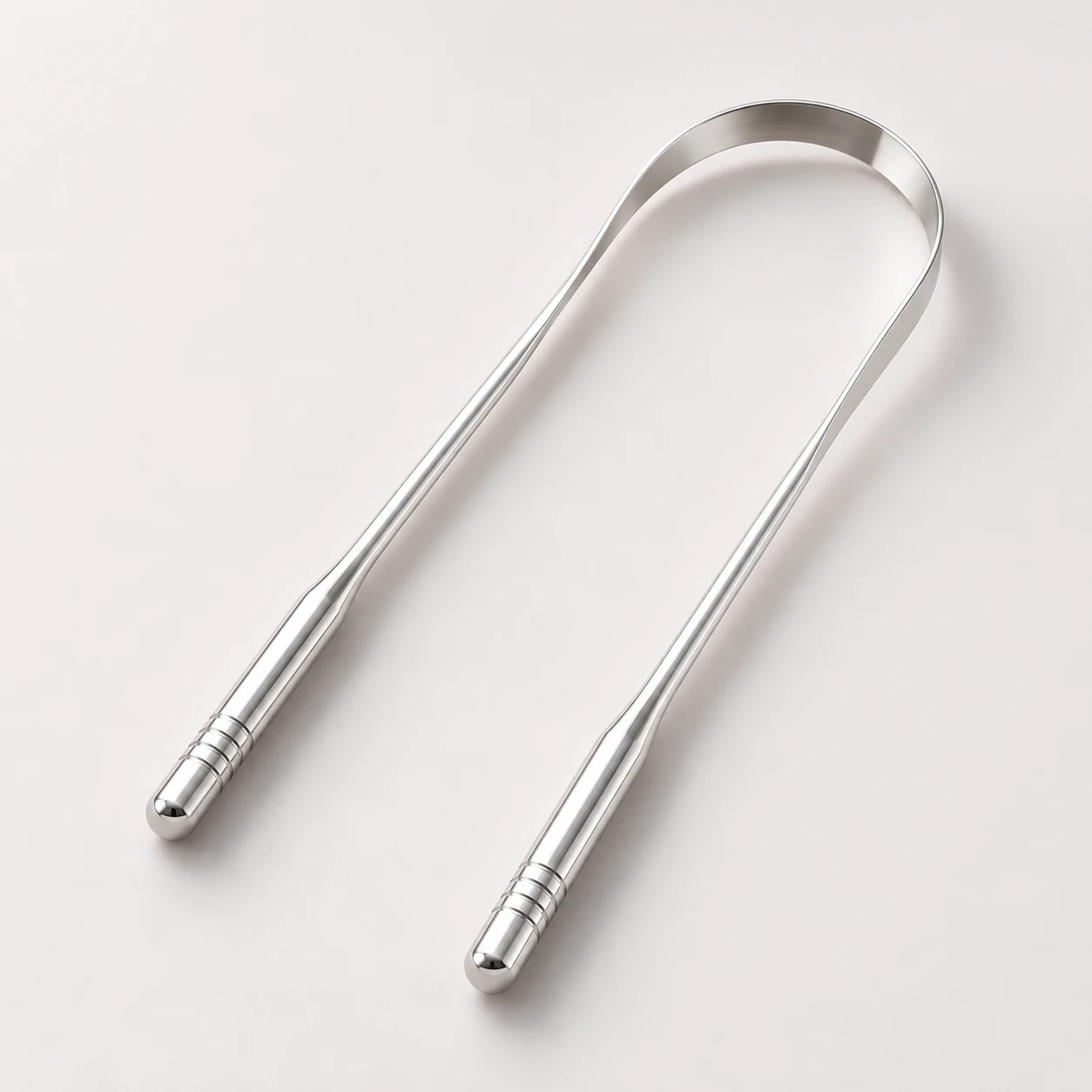
Steel Tongue Cleaner, one piece that lasts for years
A U-shaped strip of stainless steel with rounded edges and a gripped bend. A couple of passes, back to front, clear the coating on your tongue. There's no plastic to crack.
Why steel
Plastic scrapers flex, pick up scratches, and crack at the bend. Steel holds its shape, so every pass has the same even edge.
You clean it the way you'd clean a spoon: rinse it, boil it, or put it in the dishwasher. Nothing on it wears out, so you buy it once.
Animation: a U-shaped strip sweeps from the back of a field of dots to the front and clears a band through them.
Good for
- The coating that builds up on the tongue
- Anyone using the back of a toothbrush for this now
- People who want one tool that lasts
- Travel: it packs flat
Not the right tool for
- Breath that stays bad after normal cleaning: ask a dentist
- Teeth or gums
- Sharing without washing it first
How to use it
Place it back, lightly
Hold both ends and set the curve as far back on your tongue as is comfortable. Press lightly.
Pull forward
Draw it to the tip in one smooth pass, then rinse the strip under the tap.
Repeat, then dry
Two passes usually does it, three at most. Rinse it once more and leave it to dry.
Specs
- Material
- Stainless steel, one piece
- Edges
- Rounded
- Cleaning
- Boiling water or dishwasher
- Lasts
- Years, with normal use
- Refills
- None needed
Tongue cleaner questions
Steel or plastic?
Steel costs more up front, keeps an even edge, and is easier to get clean. Plastic is cheaper and gets replaced every few months.
Does it help with bad breath?
It cleans the surface of your tongue as part of a normal routine. It isn't a treatment for anything. If bad breath stays despite good cleaning, ask a dentist about it.
Will it make me gag?
Start near the middle of your tongue and work back a little each day. Breathing out through your nose while you scrape helps.
How do I keep it clean?
Rinse it after each use. Every week or so, boil it for a few minutes or run it through the dishwasher.